报告人
Tongle Wu
The Pennsylvania State University
时间
2026年1月14日 星期三
上午 10:00-11:00
地点
腾讯会议:907-298-430
https://meeting.tencent.com/dm/42JXce0JAlQk
Abstract
Conventional low-rank tensor regression implicitly assumes a global design: each response is generated by a full inner product between a tensor covariate and an unknown low-rank coefficient tensor. This can be impractical when covariates are high-dimensional or when only partial access to the coefficient tensor is available in distributed, streaming, or privacy-constrained settings.
Motivated by these limitations, in this talk, I will introduce local-access design tensor regression, where each observation is formed from an inner product between a localized subset of the coefficient tensor and a low-dimensional covariate. Focusing on third-order tensors, I introduce two Gaussian local-access design families: slice-wise and tube-wise local designs, respectively. For both settings, we formulate nonconvex estimators and provide statistical and computational guarantees.
Specifically, for slice-wise designs, we prove that alternating exact minimization and projected gradient descent method achieves exact recovery with local linear convergence under reduced sample complexity, and that a preconditioned variant removes dependence on the condition number of the coefficient to accelerate convergence. For tube-wise designs, we utilize the leave-one-out technique to prove that vanilla GD from a spectral initialization has implicit regularization to achieve a linear convergence rate under improved sample complexity. Overall, local-access designs provide provable memory, scalability, and sample-efficiency benefits for high-dimensional tensor regression.
Biography
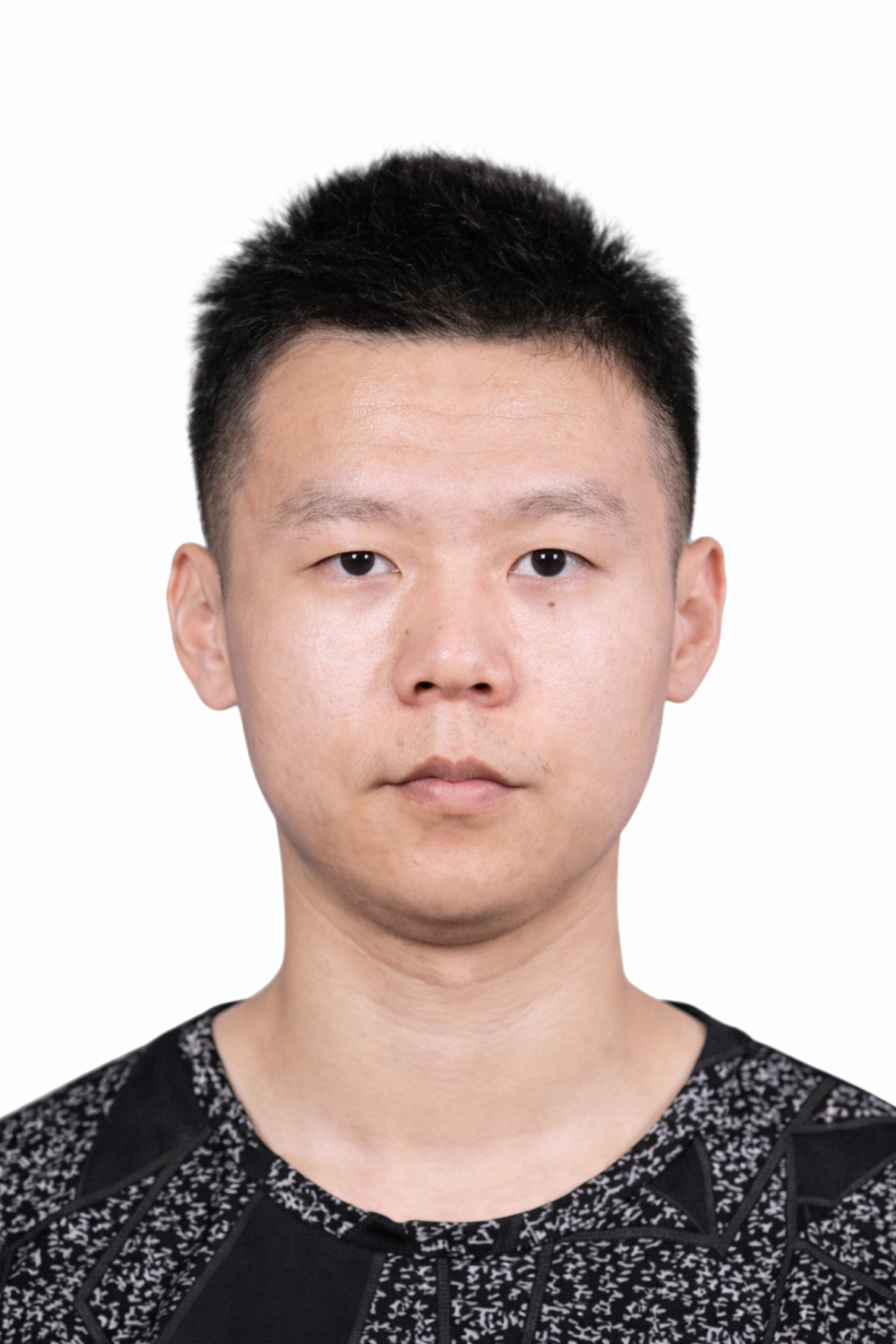
Tongle Wu is a fourth-year Ph.D. candidate in the School of Electrical Engineering and Computer Science at The Pennsylvania State University, advised by Prof. Ying Sun. His research focuses on distributed and decentralized optimization and learning, as well as high-dimensional tensor data analysis. Previously, he spent one year as a research assistant at the School of Data Science, The Chinese University of Hong Kong (Shenzhen), working with Prof. Jicong Fan. He received both his B.S. and M.S. degrees from the School of Automation Engineering, University of Electronic Science and Technology of China (UESTC), advised by Prof. Bin Gao. He has published first-author papers in AAAI and NeurIPS, and in IEEE Transactions on TSP/TIP/TNNLS/TMM.