主讲人
Ryann Sim
National University of Singapore
时间
2026年3月24日 星期二
下午 15:00-16:00
地点
腾讯会议:https://work.weixin.qq.com/webapp/tm/04JvqTtJ8Yk
Abstract
While the standard paradigm of non-cooperative game theory focuses on centralized equilibrium analysis and computation, learning in games is a setting where players employ simple learning dynamics to update their strategies over time. The primary aim of theoretical research in this direction is twofold: i) to characterize the day-to-day behavior of the dynamics, and ii) to study the convergence of algorithms to appropriate notions of game-theoretic equilibria. In this talk, I will discuss pertinent challenges that arise when attempting to model players' learning, particularly when dealing with games that fall outside 'standard' classes such as static normal-form games or extensive-form games with perfect recall. To deal with these challenges, my research has focused on studying learning dynamics in game models that have increased fidelity to modern multi-agent systems, ranging from time-evolving games to games with stochastic action availabilities, and even games of quantum information. In these game classes, I have established both dynamical regularities (e.g. Poincaré recurrence) and computational improvements. Moreover, I have worked on designing scalable algorithms for learning in various classes of games, drawing connections between online optimization and game theory while also outperforming standard methods in the literature. My recent work has been focused on the frontier of equilibrium computation in games, where I have developed sum-of-squares techniques to certify desirable properties in non-concave games. These games include as a subclass extensive-form games of imperfect recall, and more broadly can also model deep learning interactions that are becoming increasingly common in modern AI systems. Finally, I will present several key directions for future work, which will serve to further bridge the gap between classical learning in games and learning in real-world systems, improving the efficiency and modeling power of learning agents without compromising on their safety and robustness.
Biography
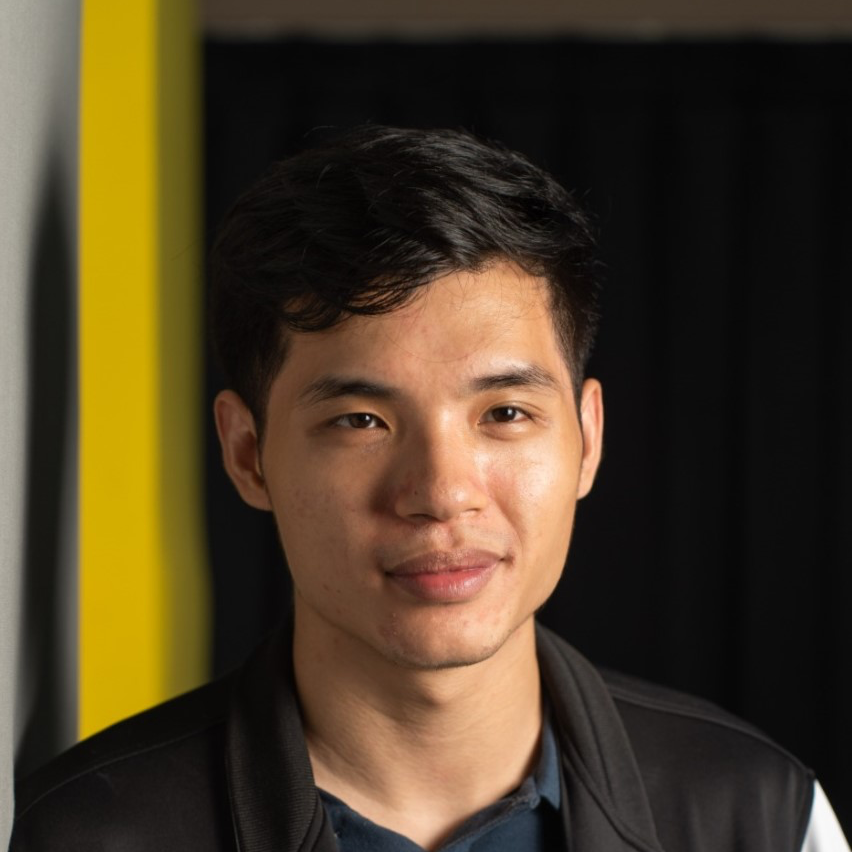
Ryann Sim is a postdoctoral researcher in the School of Computing at the National University of Singapore, working with Chun Kai Ling. Previously, he was a postdoc at the Singapore University of Technology and Design (SUTD), working with Antonios Varvitsiotis and Georgios Piliouras. He received his Ph.D. in algorithmic game theory from SUTD in 2024, supported by the SUTD President’s Graduate Fellowship. Prior to that, he received a B.Eng. in operations research, also from SUTD. His primary research interest is in studying the behavior of multi-agent systems through the lens of game theory, dynamical systems, and optimization. He is also broadly interested in the intersection between practical ethics, social choice theory, and game theory.